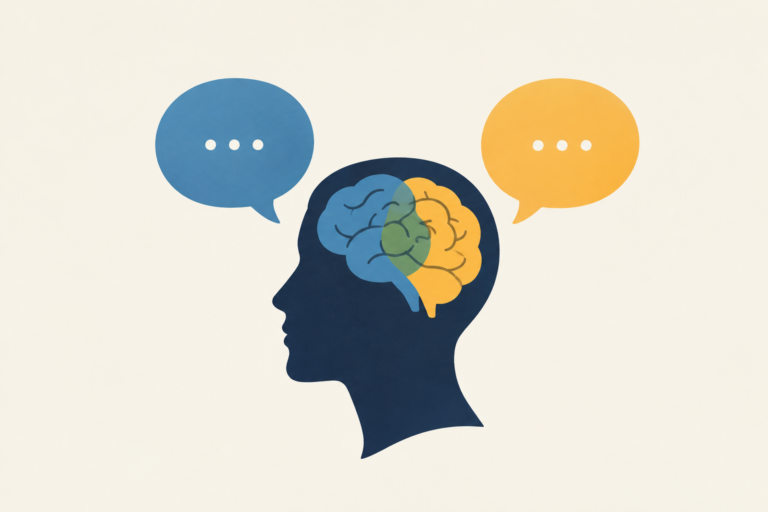
Bilingual Brains: Does Speaking Two Languages Change How You Think?
Imagine you are sitting at a table covered with objects: a cabbage, a pen, a cup, a child’s shoe. A researcher asks…
Free reading practice
Free English texts for B1-B2 learners: short, interesting articles with key vocabulary. Read online or open them in Booklex to translate any word.
Imagine you are sitting at a table covered with objects: a cabbage, a pen, a cup, a child’s shoe. A researcher asks…
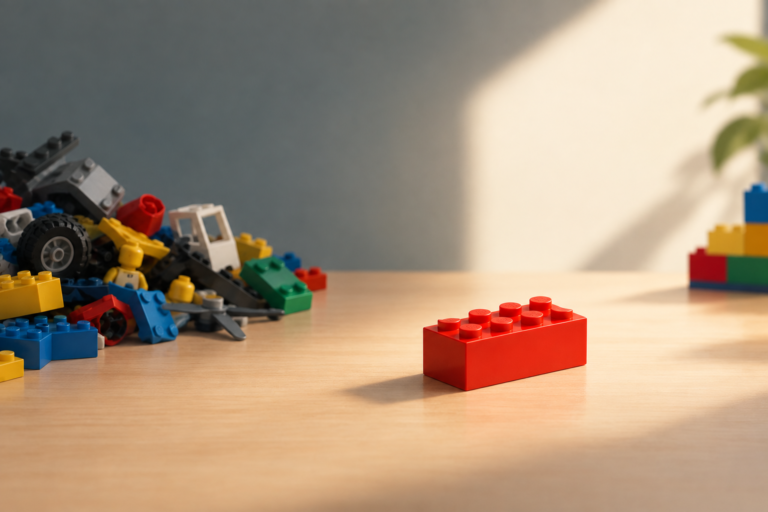
In 2003, a young Danish manager stood in front of the people who ran LEGO and told them something nobody wanted to…
Some years ago, the writer Neil Gaiman was invited to a meeting of famous artists, scientists and explorers. He felt completely out…
Ten years ago, nobody would have worn chunky sneakers with a formal suit. Today, it barely raises an eyebrow. Somewhere between a…
In 1956, a small group of scientists gathered at Dartmouth College with a bold claim: that “every aspect of learning” could, in…
He was six years old when he first stepped onto a stage. By the time he was twelve, he had a number…
The Artemis 2 mission represents one of the most significant steps in human history as we return to deep space for the…
B1 is the level of an independent user: you read clear texts on familiar topics and understand the main points. B2 goes further: you read articles and reports on a wide range of subjects, follow complex arguments and notice the writer’s point of view. What separates the two is mostly vocabulary: a B2 reader knows several thousand word families and many fixed phrases.
The articles here read like good magazine features. Sentences average around nineteen words, there are more abstract nouns, phrasal verbs and idioms, and a text often builds an argument across several sections: how a bilingual brain works, how LEGO nearly went bankrupt, what artificial intelligence really does.
At this level, progress comes mainly from volume. Read regularly, one article every day or two, and don’t translate every unknown word: try to guess it from context first and look it up only when the sentence makes no sense without it. When B1–B2 articles start to feel easy, try B2–C1.
Free on iPhone and iPad. Your first book is a tap away.