Ten years ago, nobody would have worn chunky sneakers with a formal suit. Today, it barely raises an eyebrow. Somewhere between a designer’s sketchbook and your own wardrobe, an idea traveled thousands of miles, passed through hundreds of hands, and quietly became “normal.” But who actually decides what we wear? The answer is more complicated — and more democratic — than most people think.
It Starts With a Signal, Not a Decision
Fashion trends rarely begin with someone announcing, “This will be popular next year.” Instead, they start as small signals: a musician wears an unusual jacket on stage, a street photographer snaps a stranger’s outfit in Seoul, or a vintage shop owner notices that 1990s cargo pants are suddenly flying off the shelves. None of these moments look important on their own. They only become a “trend” once enough people notice the same signal at roughly the same time.
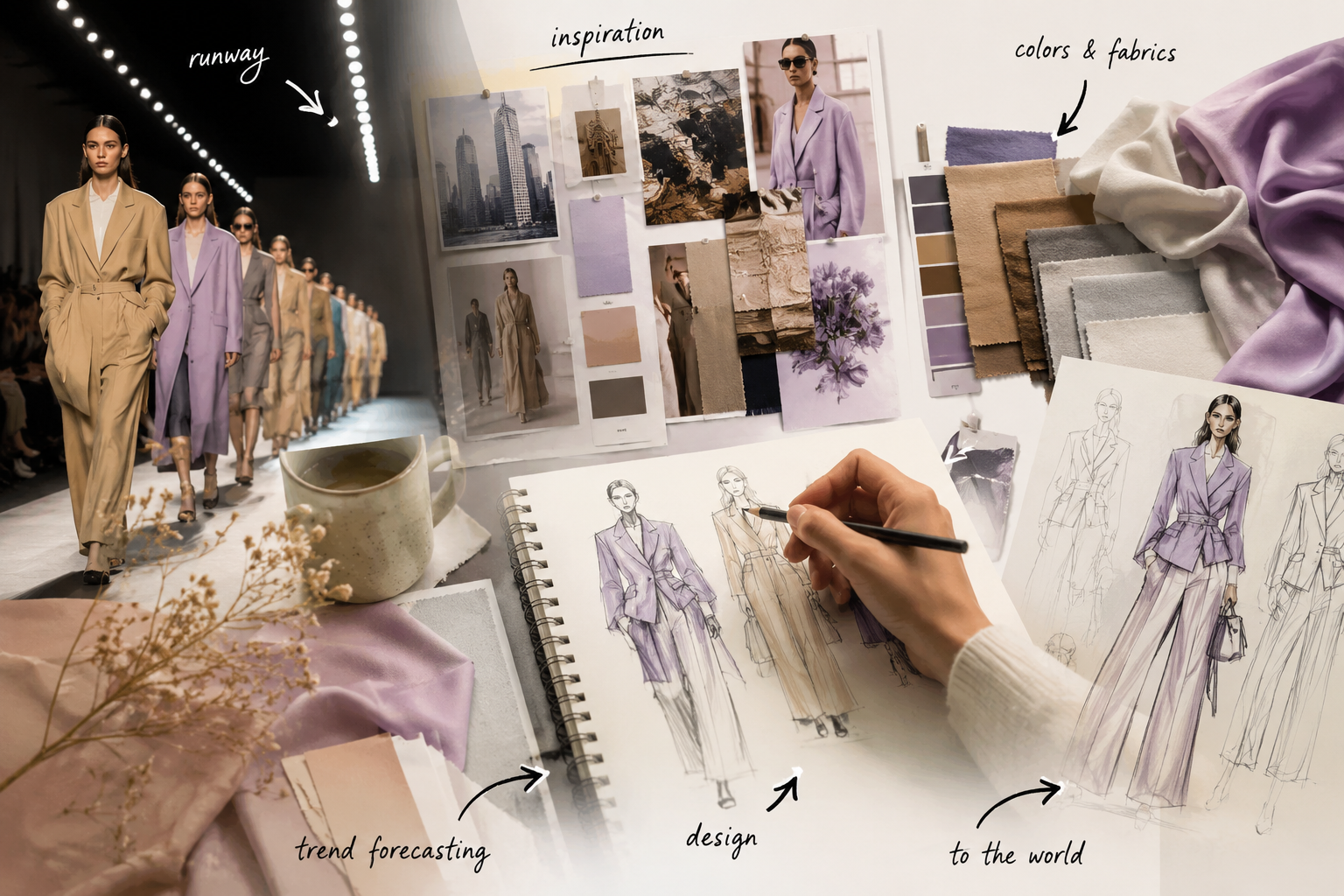
Designers and brands employ trend forecasters whose entire job is to spot these early signals before they spread. These professionals study runway shows, social media, art exhibitions, and even political moods, since clothing often reflects how people feel about the world. A wave of bright, playful colors, for example, tends to appear during times of economic recovery, while muted, practical clothing often dominates during uncertain periods.
The Trickle-Down That Became a Trickle-Up
For most of the twentieth century, fashion followed a simple pattern known as “trickle-down”: expensive designer houses in Paris or Milan created new styles, wealthy clients wore them first, and cheaper versions eventually reached ordinary shops. The direction of influence was clear — from the top of society downward.
That pattern has been turned upside down. Some of the biggest trends of the last decade — oversized streetwear, chunky “dad sneakers,” or tiny sunglasses — didn’t start in luxury ateliers at all. They started with skaters, musicians, or teenagers experimenting on the street, often out of necessity rather than any grand statement. Luxury brands then noticed these styles, borrowed them, and sold them back at a much higher price. Sociologists now call this “trickle-up” fashion, and it has fundamentally changed who holds power in the industry: not just designers, but ordinary people with a camera and an audience.
Algorithms Joined the Conversation
If trend forecasters used to rely on instinct and travel, today they also rely on data. Social media platforms can show, almost in real time, which colors, silhouettes, or accessories are gaining attention across millions of posts. A single video showing a new way to style an old jacket can be watched by tens of millions of people within days, and factories can respond far faster than they could twenty years ago.
This has created a much shorter cycle between “idea” and “everyone owns one.” A trend that once took two or three years to move from a runway to a shopping mall can now spread in a matter of weeks. Fast fashion companies have built entire business models around this speed, releasing new items almost daily to match whatever is currently trending online. Critics argue that this constant turnover encourages people to buy — and throw away — far more clothing than they actually need, raising serious questions about waste and sustainability.
Why Some Trends Disappear and Others Stay
Not every trend survives. Most fade within a single season, remembered later mainly in old photographs. A trend tends to last longer when it solves a real problem — comfortable shoes that still look stylish, for instance — rather than existing purely for novelty. Trends also survive longer when they connect to something people already feel: nostalgia for a childhood decade, a desire for individuality, or a wish to belong to a particular community.
Interestingly, many “new” trends are simply old ones returning in a slightly different form. Fashion historians often describe a twenty-year cycle, in which the styles of a particular decade come back into fashion roughly two decades later, reinterpreted for a new generation. What felt fresh and rebellious the first time around often feels fresh and rebellious again — just with different fabrics and a different soundtrack.
More People Than Ever Get a Vote
Perhaps the most interesting part of the story is who gets to participate. Fashion was once shaped almost entirely by a small circle of designers, editors, and buyers. Now, anyone with a phone can influence what millions of people wear next season, simply by posting a photo that resonates with others. A trend is no longer handed down from above; it is, quite literally, built one shared photo at a time — proof that style, in the end, belongs to everyone who chooses to wear it.