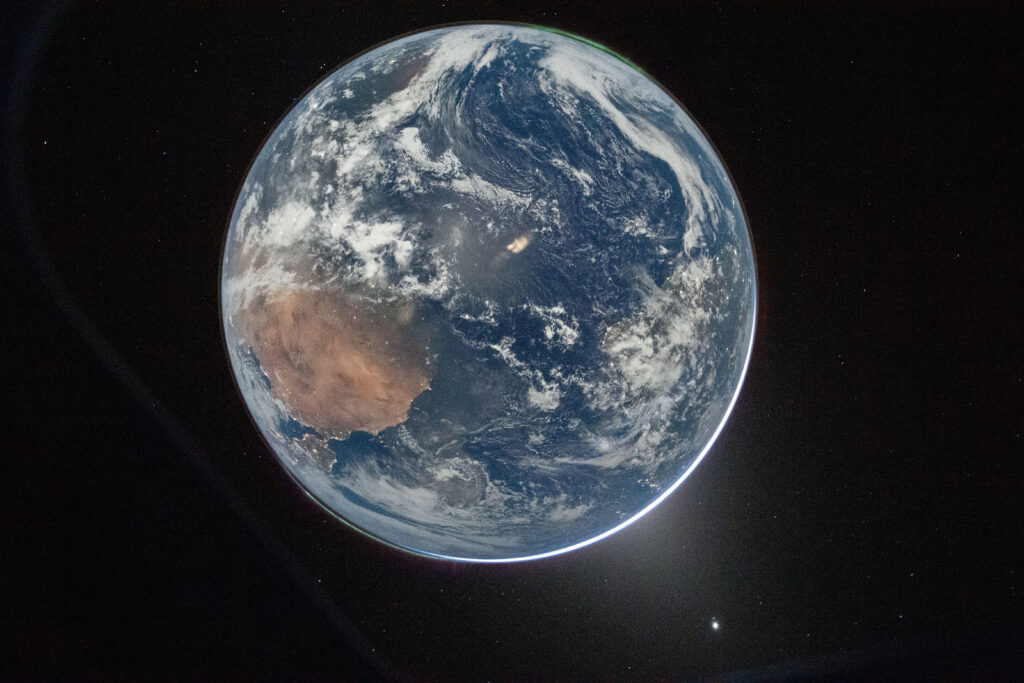
The Artemis 2 mission represents one of the most significant steps in human history as we return to deep space for the first time in over fifty years. This mission, which took place in April 2026, was not just a flight around the Moon; it was a complex test of the technology and human spirit required to establish a long-term presence on another world. By sending a crew of four astronauts on a ten-day journey, NASA and its international partners have proven that the systems designed for the 21st century are ready for the challenges of the lunar environment. This report provides a detailed analysis of the mission’s objectives, the technology used, the people involved, and the scientific data collected during this historic journey.
The Vision of the Artemis Program and International Cooperation
The Artemis program is the successor to the legendary Apollo missions of the 1960s and 70s. However, while Apollo was focused on the primary goal of landing on the Moon before anyone else, Artemis is focused on sustainability and international partnership. The program aims to land the first woman and the first person of color on the Moon, reflecting a more inclusive approach to space exploration. Artemis 2 served as the first crewed test flight in this larger campaign, bridging the gap between the uncrewed Artemis 1 mission and the planned lunar landing of Artemis 3.
A key element of this vision is the power of collaboration. NASA is the lead agency, but the success of Artemis 2 would not have been possible without the European Space Agency (ESA), the Canadian Space Agency (CSA), and other partners like JAXA and the Saudi Space Agency. For example, the European Service Module is a vital part of the Orion spacecraft, providing air, water, and power to the crew. Similarly, the inclusion of a Canadian astronaut in the crew highlights how international contributions are now a standard part of deep space exploration.
| Feature | Details of the Artemis Program |
| Primary Goal | Sustainable human presence on and around the Moon |
| Lead Agency | NASA |
| Key Partners | ESA, CSA, JAXA, and private companies |
| First Mission | Artemis 1 (Uncrewed, 2022) |
| First Crewed Mission | Artemis 2 (2026) |
| Future Target | Human mission to Mars |
The mission was originally called Exploration Mission-2 (EM-2) and had different goals before the Artemis program was officially started in 2017. The change in name and focus reflects a broader strategy to use the Moon as a “proving ground” for future missions to Mars. By learning how to live and work in the lunar environment, humanity can prepare for the much longer journey to the Red Planet.
Engineering Excellence: The Space Launch System (SLS)
The mechanical foundation of the Artemis 2 mission is the Space Launch System, or SLS. This is the most powerful rocket ever built by NASA, designed specifically to carry humans and heavy cargo to deep space. Unlike smaller rockets used for satellites near Earth, the SLS has the energy required to send a spacecraft directly to the Moon in a single launch.
The Core Stage and Propulsion Systems
The SLS consists of several major parts that work together to overcome Earth’s gravity. The center of the rocket is the orange core stage, which stands $212$ feet tall. This stage contains two giant tanks that hold more than $2.7$ million liters of liquid hydrogen and liquid oxygen. These fuels are kept at extremely cold temperatures until they are burned by the four RS-25 engines at the base of the rocket.
The RS-25 engines used for Artemis 2 have a long history, as they were originally designed for the Space Shuttle. However, they have been upgraded with new “brains” or flight software to handle the higher demands of the SLS. During the construction of the Artemis 2 rocket, engineers had to replace one of these engines (serial number E2063) with a different one (E2061) because of a small leak in the hydraulic systems. This attention to detail ensures that every part of the rocket is as safe as possible for the crew.
| Component | Technical Specification of SLS |
| Core Stage Height | 212 feet (64.6 meters) |
| Thrust at Liftoff | 8.8 million pounds |
| Core Stage Engines | 4 RS-25 engines |
| Solid Rocket Boosters | 2 five-segment boosters |
| Fuel Type | Liquid Hydrogen and Liquid Oxygen |
| Payload to Moon | 27 metric tons (Block 1 version) |
The Boosters and Upper Stage
On the sides of the core stage are two white solid rocket boosters. These are the largest and most powerful boosters ever built for flight. During the first two minutes of the launch, these boosters provide more than $75\%$ of the total thrust needed to lift the rocket off the launch pad at Kennedy Space Center. Once their fuel is gone, they fall away and splash into the ocean.
After the core stage finishes its job, the upper part of the rocket, called the Interim Cryogenic Propulsion Stage (ICPS), takes over. The ICPS uses a single RL10 engine to perform the most important maneuver of the mission: the translunar injection burn. This engine firing lasts for about five minutes and $49$ seconds, pushing the Orion spacecraft out of Earth’s orbit and on a path toward the Moon.
The Orion Spacecraft: A Home in the Deep Space Environment
While the SLS rocket provides the “muscle” for the mission, the Orion spacecraft is the “home” where the astronauts live and work. Orion is designed to be safer and more advanced than any previous human spacecraft, with systems that can protect the crew from the extreme heat of re-entry and the high levels of radiation in space.
Crew Module and Life Support
The crew module is the part of Orion where the four astronauts spend their ten-day mission. It is about the size of a large camper van, which means space is limited but efficient. Artemis 2 was the first time that Orion’s life support systems were tested with humans on board. These systems are responsible for creating breathable air, removing carbon dioxide, and providing clean water for the crew.
One of the most important lessons learned during the mission involved the waste management system, or the toilet. Early in the flight, the crew found a problem with the toilet, but they were able to fix it using their training. This highlights why human crews are so important; they can troubleshoot and solve problems that an automatic system might not be able to handle.
The European Service Module (ESM)
Attached to the bottom of the crew module is the European Service Module (ESM). Provided by the European Space Agency, the ESM is the “powerhouse” of the spacecraft. It has four solar arrays that look like wings, which collect energy from the Sun to power the ship’s computers and heaters. It also contains the main engine and smaller thrusters that the crew uses to change their path or turn the spacecraft.
| System | Role in the Orion Spacecraft |
| Crew Module | Habitat for the 4 astronauts |
| Heat Shield | Protects the craft during $43,000$ km/h re-entry |
| ESM Solar Arrays | Provides electrical power from sunlight |
| ESM Tanks | Holds water, oxygen, and nitrogen |
| Launch Abort System | Pulls the crew to safety if the rocket fails |
| Guidance Computers | Calculates position using stars and the Sun |
The spacecraft also features advanced navigation tools. It uses star trackers—cameras that take pictures of the stars—to figure out exactly where it is in space. It also has sun sensors to make sure the solar panels are always pointing in the right direction. For the Artemis 2 mission, the crew named their spacecraft “Integrity,” a name that represents their commitment to the mission and each other.
The Crew: Four Pioneers Making History
The selection of the Artemis 2 crew was a major event because it included many “firsts” for space exploration. The four individuals were chosen for their incredible skills, experience, and ability to work as a team under pressure.
Commander Reid Wiseman
The mission was led by Commander Reid Wiseman, a $50$-year-old veteran of the U.S. Navy and NASA. Wiseman previously spent $165$ days on the International Space Station in 2014. He is known for his leadership and his background in systems engineering. As a single parent to two children, his journey was also an inspiration to many families on Earth. During the mission, the crew proposed naming a lunar crater “Carroll” in honor of his late wife.
Pilot Victor Glover
Victor Glover served as the pilot for Artemis 2, making history as the first person of color to travel to the Moon. Glover is a highly experienced naval aviator with over $3,000$ flight hours in $40$ different types of aircraft. He previously piloted the SpaceX Crew-1 mission to the ISS. His role on Artemis 2 was to help manage the spacecraft’s systems and test the manual piloting controls, ensuring that humans can fly the ship if the automatic systems fail.
Mission Specialist Christina Koch
Christina Koch is an electrical engineer who already held the record for the longest single spaceflight by a woman before joining Artemis 2. On this mission, she became the first woman to travel to the Moon. Koch has spent $328$ days in space and has completed six spacewalks. Her technical expertise was vital during the mission, especially when she helped repair the spacecraft’s waste system.
Mission Specialist Jeremy Hansen
Jeremy Hansen made history as the first non-American to journey to the Moon. As an astronaut with the Canadian Space Agency, his inclusion was a sign of the strong partnership between Canada and the United States. Hansen was a fighter pilot in the Royal Canadian Air Force and has been an astronaut since 2009. Although this was his first trip to space, he brought years of experience in leadership and mission planning.
| Astronaut | Nationality | Role | Key Fact |
| Reid Wiseman | USA | Commander | Former Chief of the Astronaut Office |
| Victor Glover | USA | Pilot | First person of color to go to the Moon |
| Christina Koch | USA | Specialist | Held the record for longest female flight |
| Jeremy Hansen | Canada | Specialist | First Canadian to fly beyond Earth orbit |
The Ten-Day Mission Log: A Day-by-Day Journey
The trajectory of Artemis 2 was carefully planned to test every system of the Orion spacecraft while keeping the crew on a “free-return” path. This means that if something went wrong with the engines, the Moon’s gravity would naturally pull the ship back toward Earth.
Day 1 and 2: Launch and Earth Orbit
The mission began on April 1, 2026, with a perfect launch from Florida. Once in space, the crew did not immediately head for the Moon. Instead, they spent the first $24$ hours in a high Earth orbit. This allowed them to test the life support systems near Earth, where they could still return quickly if there was an emergency.
On the second day, the crew performed a “proximity operations” demonstration. They used the empty ICPS rocket stage as a target and practiced flying the Orion spacecraft near it. This was a critical test of the manual hand controllers and the cameras used for docking. After this, the ICPS performed a final burn to move away and burn up in Earth’s atmosphere.
Day 3 to 5: The Journey Outbound
Once the systems were verified, the Orion engine performed the translunar injection burn to send the crew toward the Moon. During the three-day trip across the “void” between Earth and the Moon, the crew was busy with science experiments and medical checks. They also had time to talk to their families and share images of Earth.
On Flight Day 5, the crew officially entered “lunar space”. This is the point where the Moon’s gravity becomes stronger than Earth’s gravity, pulling the spacecraft toward the lunar surface. This was a historic moment, as no humans had been in this region of space since the end of the Apollo program in 1972.
Day 6: The Record-Breaking Lunar Flyby
April 6, 2026, was the most exciting day of the mission. The crew reached the Moon and performed a flyby, passing just $4,067$ miles ($6,545$ km) above the surface. As they passed behind the Moon, they lost contact with mission control for about $40$ minutes. During this time, they became the first humans in over $50$ years to see the far side of the Moon with their own eyes.
It was on this day that the crew broke the record for the farthest distance humans have ever traveled from Earth. They reached a maximum distance of $252,756$ miles ($406,771$ km) from home. Commander Wiseman noted that from this distance, the Moon looked like a basketball held at arm’s length, while Earth appeared as a beautiful, fragile blue marble in the darkness.
| Mission Day | Main Activity | Importance |
| Day 1 | Launch from Florida | Successful start of the mission |
| Day 2 | Manual Piloting Test | Proved humans can steer Orion |
| Day 3-5 | Deep Space Transit | Testing radiation and life support |
| Day 6 | Lunar Flyby | Broke distance record; saw far side |
| Day 7-9 | Return Trip | Preparing the cabin for splashdown |
| Day 10 | Splashdown | Safe return to the Pacific Ocean |
Day 7 to 10: The Long Road Home
After swinging around the Moon, the spacecraft began its four-day return trip to Earth. The crew spent this time packing their equipment, exercising to stay healthy in microgravity, and performing final checks of the heat shield and parachutes. On April 10, 2026, the crew module separated from the service module and entered Earth’s atmosphere.
The re-entry was a high-speed event, with the spacecraft slowing down from $24,500$ miles per hour. The heat shield protected the crew as temperatures outside reached thousands of degrees. Finally, the three main parachutes deployed, and the spacecraft splashed down safely in the Pacific Ocean southwest of San Diego. The crew was quickly recovered by the USS John P. Murtha and taken for medical checkups.
Science and Research: Using the Crew as Subjects
Artemis 2 was not just about flying; it was a major scientific mission. Because humans had not been in deep space for a long time, scientists wanted to study how the environment affected the astronauts’ bodies and minds.
Human Health Studies
The astronauts participated in several physiological studies. One experiment, called AVATAR, used “organ-on-a-chip” technology to see how radiation and low gravity affect human cells. These tiny devices contain living cells that act like real human organs, allowing scientists to see changes at a molecular level.
The crew also monitored their own immune systems. They collected saliva and blood samples throughout the mission to see if the stress of space travel makes people more likely to get sick. These studies are essential for future missions to Mars, which will take much longer than ten days and will expose astronauts to even more radiation.
Radiation and Shielding
Beyond the Earth’s magnetic field, radiation is a serious danger. Artemis 2 carried six active radiation sensors inside the cabin to measure the levels of space weather. The crew also tested a specialized “radiation shelter” inside the Orion capsule, which they could use if a solar storm occurred. This mission helped confirm that the shielding built into Orion is enough to keep astronauts safe during a trip to the Moon.
Lunar Observations
Even though they did not land, the astronauts were able to do important geology work. Using their training from places like Iceland and Labrador, they photographed $30$ specific targets on the Moon. One of the most important was the Orientale Basin, a giant crater that is $600$ miles wide. By looking at these features up close, the astronauts helped scientists understand the ancient history of the Moon and the solar system.
Life on Board: Food, Water, and Daily Routine
Living in a small spacecraft for ten days requires a lot of preparation. The Artemis 2 astronauts had everything they needed to survive and stay comfortable, from a diverse menu to communication tools that let them talk to people on Earth.
The Space Menu
Nutrition is vital for astronaut health. The crew had access to $189$ unique food items during their mission. This included breakfast items, snacks, and main meals like barbecue beef brisket, macaroni and cheese, and butternut squash. They even had desserts like cookies and chocolate. To stay hydrated, they had $10$ different types of beverages, including coffee and smoothies. Because Orion does not have a refrigerator, all the food was specially packaged to stay fresh at room temperature.
| Category | Examples of Artemis 2 Food |
| Main Meals | Barbecue Beef Brisket, Mac and Cheese |
| Vegetables | Cauliflower, Butternut Squash |
| Snacks | Nuts, Tortillas |
| Desserts | Cookies, Chocolate |
| Beverages | Coffee, Fruit Smoothies |
Daily Routine and Sleep
The crew followed a strict schedule to make sure they got enough rest. At least $8.5$ hours each day were set aside for sleep. However, their first sleep period was split into two parts because they had to perform an important engine burn to raise their orbit. When they weren’t working or sleeping, the crew spent time looking out the windows and taking photos. They used a special curtain with a hole for the camera lens to stop light from inside the cabin from reflecting on the glass.
The Impact of the Mission: “Moon Joy” and the Future
The success of Artemis 2 has had a huge impact on the world. The term “Moon joy” was used to describe the excitement people felt as they watched humans return to the Moon. Millions of people watched the launch and the live downlinks from space, feeling a sense of unity as the crew looked back at Earth.
Lessons for Artemis 3 and 4
The data from Artemis 2 is now being used to plan the next missions. Engineers are studying the $31$ terabytes of imagery and $4$ terabytes of data collected from the SLS rocket to see how it can be improved. One of the main takeaways was that the SLS performed almost exactly as predicted, with the engines providing the correct amount of thrust to reach the required speed.
The success of the Orion life support system means that NASA is now confident in sending humans to the lunar surface on Artemis 3, which is scheduled for 2027. On that mission, astronauts will use a separate lunar lander—like SpaceX’s Starship HLS—to actually step onto the Moon.
Preparing for Mars
Finally, Artemis 2 was a major step toward Mars. By testing how humans handle the radiation and isolation of deep space, NASA is building the knowledge needed for a three-year journey to the Red Planet. The mission showed that international teams can work together to solve complex problems and that the human spirit of exploration is as strong today as it was during the time of the Apollo missions.
| Future Mission | Estimated Date | Objective |
| Artemis 3 | 2027 | First human landing at the Moon’s South Pole |
| Artemis 4 | 2028 | First mission to dock with the Gateway station |
| Artemis 5 | Late 2028 | Building the first base on the Moon |
| Mars Flyby | 2033 | First human journey to the Red Planet |
Conclusion
The Artemis 2 mission was a triumph of engineering and human determination. Over the course of ten days, the crew of Reid Wiseman, Victor Glover, Christina Koch, and Jeremy Hansen showed the world that we are ready to return to the Moon and go beyond. From the powerful launch of the SLS rocket to the record-breaking distance reached in deep space, every part of the mission provided valuable lessons for the future. As we look forward to the next steps in the Artemis program, the legacy of this mission will be remembered as the moment when humanity truly began its permanent journey into the stars.