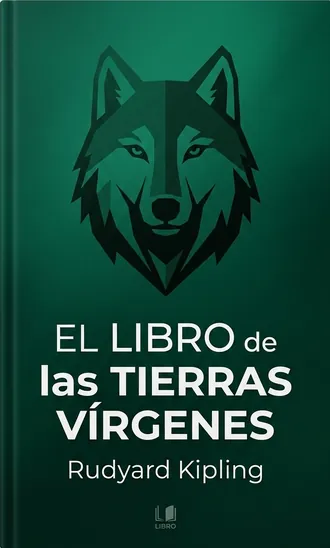
The Jungle Book (El libro de las tierras vírgenes) for Spanish learners: level, words and how to read it
Most people know Mowgli from films, but Kipling’s book is bigger and wilder: fifteen stories of animals, men and the law of the jungle. This Spanish edition by Ramón D. Perés has both Jungle Books in one volume. Here is how hard it is and where to start.
- Author
- Rudyard Kipling
- Translation
- Ramón D. Perés
- Level
- B2
- Words
- 133,926
- Stories
- 15
- Reading time
- ≈ 15 h

Read El libro de las tierras vírgenes in Booklex
In the app’s free library. Tap a word to see what it means.

What the book is about
A baby lost in the Indian jungle is adopted by wolves and named Mowgli. Baloo the bear teaches him the Law of the Jungle, Bagheera the panther protects him, and the tiger Shere Khan wants him dead. In the Mowgli stories he is kidnapped by monkeys, rescued by the python Kaa, sent to live among men and finally returns to the jungle as its master.
Between them come stories without Mowgli: the white seal Kotick looking for a safe beach, the mongoose Rikki-tikki-tavi fighting two cobras in the garden of an English family in India, the boy Toomai who sees the elephants dance, an Inuit boy and his dogs in “Quiquern”. Short poems and songs close most stories.
Themes
- Law and belonging. Mowgli lives by the rules of the pack but never fully belongs to wolves or to men.
- Growing up. From a baby in a cave to a young man who must choose his world.
- Courage of the small. A mongoose, a seal and a boy face enemies much bigger than themselves.
- Nature and its order. Every animal has its place, its pride and its rules.
How hard is The Jungle Book to read in Spanish?
Most of this book is made of everyday Spanish. The 2,000 most common words cover 84.2% of it, so a learner who knows only those meets about 16 new words in every hundred. At 5,000 known words that drops to around 10, and at 10,000 to about 6.
Reading without help feels easy at about 98% familiar words (see our guide), which puts this book at B2–C1 by vocabulary. You do not need to know every word in advance, though: with tap-to-translate it works from B2. It is slightly harder than Marianela and slightly easier than Fortunata y Jacinta.
What is hard: the book is long, about 15 hours; it is full of animal and nature words (manada, cubil, bramido, olfatear, enroscar), the old spelling uses á for the preposition a, and verbs often carry the pronoun at the end (rascóse, echóse), as in 19th-century prose. The songs between stories are harder than the prose. What helps: each story stands alone and takes about an hour, the animal characters speak simply, and the plots are easy to follow.
Our take: B2 with tap-to-translate (B2–C1 by vocabulary). Don’t try to read it straight through: pick the stories you want, one per evening.
Words to know before you start
Below are words that come up again and again in The Jungle Book but are rare in modern Spanish. Knowing them before you start saves a lot of tapping in the first chapters.
| Word | Meaning | Times in the book |
|---|---|---|
| manada | pack, herd | 179 |
| foca | seal (animal) | 127 |
| chacal | jackal | 84 |
| gamo | deer, buck | 33 |
| cubil | lair, den | 27 |
| aullar | to howl | 27 |
| bramido | roar, bellow | 18 |
| olfatear | to sniff | 12 |
| enroscar | to coil, to curl up | 12 |
| resoplar | to snort, to puff | 11 |
How to read it in Spanish
- Start with “Rikki-tikki-tavi”. It is short, complete and very exciting.
- Read the Mowgli stories in order. They form one story from “Los hermanos de Mowgli” to “Correteos primaverales”.
- Skip the songs at first. Come back to them once the prose feels easy.
- Learn the animal words once. Manada, cubil, chacal and gamo come back in almost every story.
The first line
Eran las siete de una calurosa tarde en las colinas de Seeonee, cuando papá Lobo despertó de su sueño diurno, rascóse, bostezó y estiró las patas una tras otra para quitarse de encima la pesadez que en ellas sentía aún.
Rudyard Kipling, El libro de las tierras vírgenescalurosahotadjective
Tap a highlighted word
“It was seven o’clock of a very warm evening in the Seeonee hills when Father Wolf woke up from his day’s rest, scratched himself, yawned, and spread out his paws one after the other to get rid of the sleepy feeling in their tips.” The opening of the first Mowgli story. Notice rascóse, “scratched himself”: the old Spanish way of putting the pronoun after the verb, which you will meet often in this translation.
Frequently asked questions
Is The Jungle Book hard to read in Spanish?
The everyday vocabulary is manageable, but animal and nature words and the old style of the translation put it at B2–C1. Each story is short and self-contained, so with tap-to-translate you can start from B2.
What Spanish level do I need for The Jungle Book?
From B2, if you translate unknown words with a tap. Reading without any help needs about B2–C1. If it feels too hard, start with Marianela, which is a little easier.
