
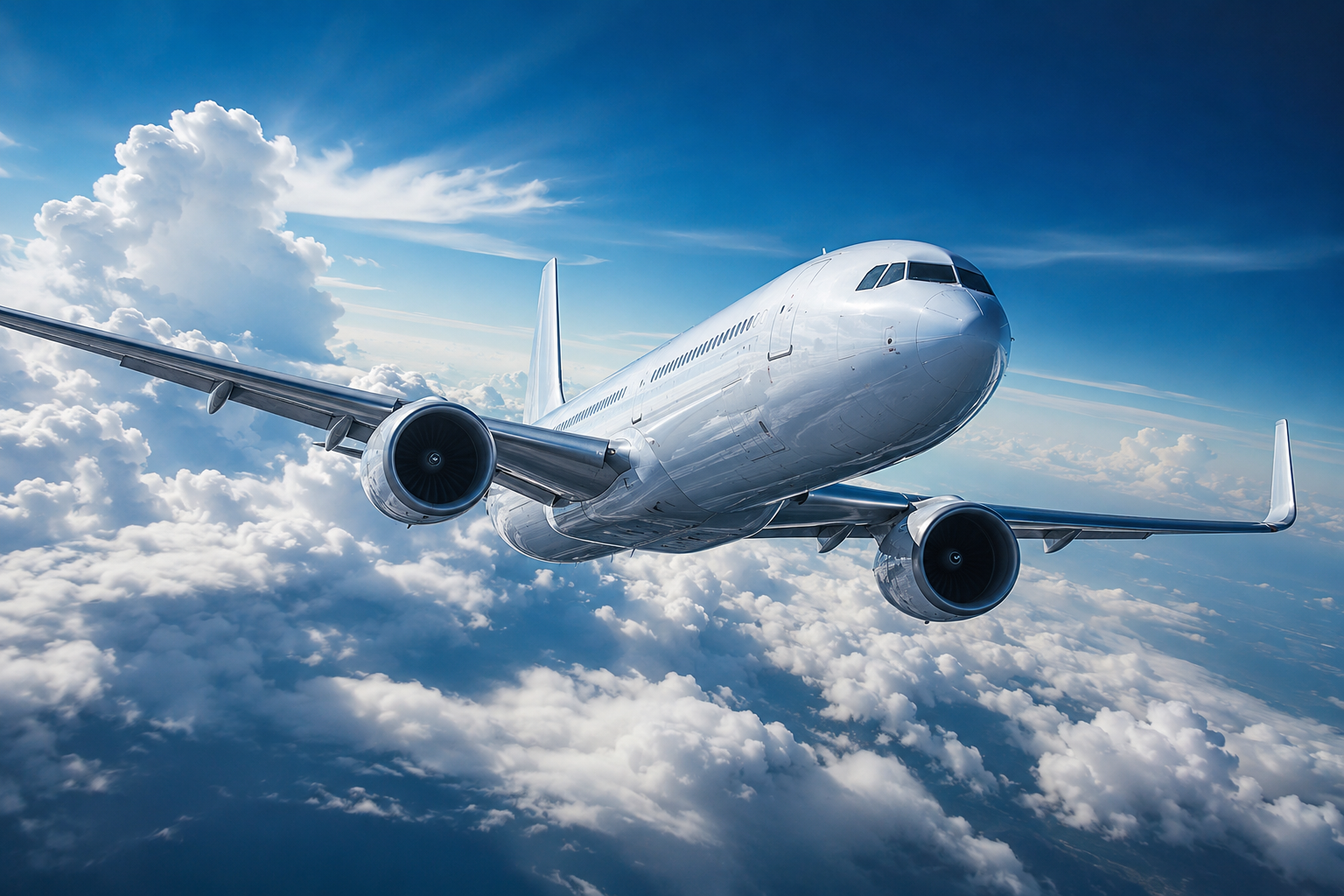
Whether you are a nervous first-time flyer or a seasoned traveler who has collected hundreds of boarding passes, the world of aviation is full of fascinating stories, surprising facts, and a little bit of magic. Buckle up — this is going to be a great ride.
Before We Take Off: A Quick History of Flight
Imagine standing at an airport in 1903. There are no departure boards, no security checkpoints, no overpriced sandwiches in the terminal. In fact, there is no airport at all. Just a cold, windy beach in North Carolina and two brothers with a dream.
On December 17, 1903, Orville and Wilbur Wright made history when their aircraft, the Flyer, stayed in the air for just 12 seconds and traveled 36 meters. It was not exactly a long-haul flight, but it changed the world forever.
Fast forward to today, and more than 100,000 flights take off and land around the world every single day. Millions of passengers check in, go through passport control, and board planes to destinations near and far. What seemed impossible just over a century ago is now completely routine — and that is truly remarkable.
How Does a Plane Actually Fly?
This is one of those questions that travelers often think about while sitting in their seat, staring out the window at the wing. How does something so heavy actually stay up in the sky?
The answer comes down to four basic forces: lift, weight, thrust, and drag.
- Lift is the upward force created by the shape of the wings. As air moves over the curved top of the wing faster than it moves under the flat bottom, it creates lower pressure on top. This pressure difference pushes the plane upward.
- Weight is simply gravity pulling the plane down.
- Thrust is the forward force produced by the engines, pushing the plane through the air.
- Drag is the resistance of the air against the plane — think of it like wind pushing back against your hand when you stick it out of a car window.
When lift is greater than weight and thrust is greater than drag, the plane climbs. When these forces balance out, it cruises smoothly at altitude. Simple in theory, remarkable in practice.
The Airport Experience: More Than Just Waiting Around
For many travelers, the journey begins long before they board the plane. It starts at the airport — that unique world of rolling suitcases, coffee cups, and people rushing to their gates.
Modern airports are incredible places. Some of them, like Singapore’s Changi Airport, are famous tourist attractions in their own right. Changi has an indoor waterfall, a butterfly garden, a movie theater, and hundreds of shops and restaurants. Some travelers actually plan a layover there just to spend more time in the terminal.
Here is what a typical airport journey looks like for most passengers:
- Check-in: You arrive at the airport and check in at the counter or at a self-service kiosk. You drop off your luggage and receive your boarding pass.
- Security screening: You go through security, where staff check your carry-on bags and make sure you are not bringing any prohibited items on board.
- Passport control: On international flights, you pass through passport control (also called immigration). Officers check your travel documents and stamp your passport.
- The gate: You find your gate and wait for your flight to be called. This is when most people grab a coffee, browse the duty-free shops, or scroll through their phones.
- Boarding: When your flight is ready, the gate agent announces boarding. Passengers board in groups — usually business class and frequent flyers first, then economy class by row number.
If you have ever felt confused at an airport, you are not alone. Even experienced travelers sometimes miss a connection or end up at the wrong terminal. The key is to arrive early, read the departure board carefully, and always double-check your gate before you settle in for a long wait.
Inside the Cockpit: A World of Buttons and Screens
If you have ever peeked through the cockpit door before boarding, you may have felt a little overwhelmed. There are hundreds of switches, dials, screens, and buttons everywhere. How do pilots keep track of it all?
The answer is training — years and years of it. To become a commercial airline pilot, a person must complete thousands of hours of flight training, pass many difficult exams, and earn several different licenses and certifications. Most airline captains have been flying for 10 to 20 years before they sit in the left seat of a large passenger aircraft.
A modern cockpit is called a glass cockpit because the old analog dials have been replaced by large digital screens that display all the information pilots need: altitude, speed, heading, weather, fuel levels, engine performance, and much more. These screens make flying safer and easier to manage.
Most commercial flights also use autopilot for large portions of the journey. This does not mean the pilots are sleeping — they are constantly monitoring the systems, communicating with air traffic control, and making decisions. But autopilot handles the routine work of keeping the plane on course and at the right altitude, which reduces pilot fatigue on long-haul flights.
The Crew That Makes It All Work
When you board a plane, you probably think of the flight attendants as the people who bring you drinks and point out the emergency exits. And yes, they do those things. But their most important job is safety.
Flight attendants are trained to handle medical emergencies, evacuate a plane in 90 seconds or less, fight fires on board, and keep passengers calm during turbulence. They go through rigorous safety training before they ever step onto a plane as crew members.
Behind the scenes, there are also many other people who make your flight possible:
- Ground crew who load your luggage and refuel the aircraft
- Air traffic controllers who guide planes safely through busy skies
- Aircraft mechanics who inspect and maintain every part of the plane
- Dispatchers who plan the flight route and calculate fuel requirements
By the time you take your seat and fasten your seatbelt, hundreds of people have already worked to make sure your journey goes smoothly.
Why Is Flying So Safe?
Many people are afraid of flying, but the statistics are clear: flying is one of the safest ways to travel. You are far more likely to be involved in a road accident on the way to the airport than you are to experience any kind of problem on your flight.
This remarkable safety record is the result of decades of careful work. Every time there is an incident in aviation — no matter how minor — it is investigated, analyzed, and used to improve procedures and technology. Aviation does not just learn from mistakes; it practically obsesses over them.
Some of the key safety features on modern aircraft include:
- Redundant systems: Everything important has a backup. Planes have multiple hydraulic systems, multiple engines, and even multiple computers. If one fails, another takes over.
- Regular maintenance: Aircraft are inspected before every single flight. Every few thousand hours, they go through deep maintenance checks where mechanics take apart major systems and inspect them piece by piece.
- Weather avoidance: Pilots and dispatchers constantly monitor weather and can reroute flights to avoid dangerous storms.
- Black boxes: Every commercial plane carries a flight data recorder and a cockpit voice recorder. These help investigators understand exactly what happened if there is ever an accident.
The result? Commercial aviation has never been safer than it is today.
What Happens During Turbulence?
If there is one thing that makes even confident flyers grip their armrests, it is turbulence. That sudden shaking, dropping, or bumping sensation can feel alarming — but in almost all cases, it is completely harmless.
Turbulence happens when the plane flies through air that is moving in different directions at different speeds. Think of it like driving over a bumpy road. The car does not fall apart — it just bounces around a little. Planes are designed and tested to handle turbulence that is far more intense than anything passengers normally experience.
There are different types of turbulence:
- Clear-air turbulence happens at high altitude, often near jet streams, and cannot be seen on radar. It is the most common type on long-haul international flights.
- Thermal turbulence happens at lower altitudes when warm air rises from the ground on hot days. You often feel this during takeoff and landing.
- Convective turbulence is caused by thunderstorms. Pilots always try to fly around large storm systems.
The best advice during turbulence? Keep your seatbelt fastened (even when the seatbelt sign is off, it is a good habit), put away your drink, and trust the crew. They have been through it many times before.
Amazing Aviation Facts to Share at Your Next Layover
If you find yourself stuck in a long transit and need something to talk about, here are some fascinating facts about aviation to impress your fellow travelers:
- The world’s longest non-stop flight is currently operated by Singapore Airlines from Singapore to New York — approximately 18 hours and 45 minutes in the air, covering around 15,350 kilometers.
- A Boeing 747 has about 6 million parts. If all of them were perfectly arranged in a line, they would stretch for hundreds of kilometers.
- The tires of a commercial airplane can hit the runway at speeds of over 260 km/h during landing and do not explode because they are inflated to about 6 times the pressure of a typical car tire.
- Lightning strikes aircraft more often than you might think — each plane is struck by lightning an average of once or twice a year. Aircraft are designed to handle this safely, and passengers rarely even notice.
- The air inside the cabin is actually a mixture of fresh outside air and recycled cabin air. The recycled portion passes through HEPA filters that remove 99.97% of bacteria and viruses — the same filters used in hospital operating rooms.
- Pilots are not allowed to eat the same meal on a flight. This is a safety precaution — in case the food causes illness, at least one pilot will still be able to fly the plane.
The Future of Aviation: What Is Coming Next?
Aviation is always changing, and the next few decades promise some truly exciting developments for travelers everywhere.
Electric aircraft are already flying short routes, and several companies are working on electric planes that could carry passengers on regional flights within the next 10 years. These planes produce no direct emissions and are much quieter than traditional jets.
Sustainable aviation fuel (SAF) is another major development. Made from sources like used cooking oil, agricultural waste, or even captured carbon dioxide, SAF can reduce the carbon emissions of a flight by up to 80% compared to regular jet fuel. Many airlines have already started blending SAF into their regular fuel supply.
Supersonic travel may also make a comeback. Several companies are developing new supersonic passenger aircraft that could fly from London to New York in under 4 hours — half the time of current flights. Unlike the old Concorde, these new designs aim to be quieter and more fuel-efficient.
And for those who dream of truly futuristic travel, space tourism is already happening. Companies like SpaceX and Blue Origin have already taken private passengers beyond Earth’s atmosphere. It is not a mainstream way to travel yet — the ticket price is still rather high — but it shows just how far aviation has come since those 12 seconds on a beach in 1903.
Final Boarding Call
Aviation is one of humanity’s greatest achievements. It connects people across continents, brings families together for the holidays, opens up new destinations for curious travelers, and makes the world feel a little smaller and a little more connected.
The next time you pack your bags, drag your suitcase to the check-in counter, and walk through that gate onto your flight, take a moment to appreciate what is happening. You are sitting in a metal tube, 10,000 meters above the Earth, traveling at nearly 900 km/h — and it is perfectly safe, beautifully engineered, and nothing short of extraordinary.
Safe travels. And enjoy the journey.