
How a small television experiment in 1956 became the world’s biggest music competition
Every May, more than 160 million people across Europe — and around the world — sit down to watch singers in extraordinary costumes perform songs they will probably never hear again. Some of those songs are brilliant. Some are bizarre. Almost all of them are unforgettable. This is Eurovision, and for nearly seventy years, it has been one of the most remarkable events in television history.
Where it all began
History · 1956
The Eurovision Song Contest was born in Lugano, Switzerland, on May 24, 1956. At that time, television was a brand-new technology, and most people in Europe did not yet own a TV set. The European Broadcasting Union (EBU) — a group of public broadcasters from different countries — wanted to experiment with broadcasting a live event across multiple countries at the same time. Music seemed like the perfect way to do it.
The original idea came partly from Italy’s successful San Remo music festival. The name of the first contest was the “Grand Prix Eurovision de la Chanson Européenne.” Only seven countries participated: Switzerland, Belgium, France, Germany, Italy, Luxembourg, and the Netherlands. Each country performed two songs, and Swiss singer Lys Assia won — though the voting results from that first contest were never made public and remain unknown to this day.
The contest was not created just for entertainment. Europe had recently suffered through the Second World War, and the EBU hoped that a shared musical event might help countries feel more connected to each other — using culture as a bridge between nations.
The event grew quickly. By 1961, the number of participating countries had more than doubled. Groups were not allowed to compete until 1971, and for the first few decades, all performances were accompanied by a live orchestra. The orchestra was dropped in 1999, allowing artists to use recorded backing tracks instead.
How does it work?
Format & rules
The format of Eurovision has changed many times over the decades, but the basic idea has always been the same: each participating country selects one artist and one song, they perform it live on stage, and then the countries vote to choose a winner.
Today, the contest takes place over three nights — two semi-finals and a grand final, all held in the same week in May. In the semi-finals, most countries compete for a place in the grand final. A group of countries called the “Big Five” — France, Germany, Italy, Spain, and the United Kingdom — automatically qualify for the final each year, because they contribute the most money to the EBU. The host country also qualifies automatically.
Voting works in two parts. Each participating country has a professional jury of five music experts who award points, and then the public votes by telephone or text message. Each jury and each public vote awards points on a scale of 1 to 12 — with the famous “douze points” (12 points) going to the country they love most. A country cannot vote for itself. The final score is a combination of jury points and public vote points.
No more than six people are allowed on stage during a performance — including singers, dancers, and musicians. Songs must be no longer than three minutes.
Stars born on the Eurovision stage
Famous winners
Over the decades, Eurovision has launched the careers of some of the world’s biggest music stars.
The most famous example is ABBA. The Swedish group won the 1974 contest in Brighton, United Kingdom, with their song “Waterloo.” At the time, the performance was considered bold and unusual — ABBA wore glittery costumes and played electric guitars. The audience loved it, and “Waterloo” became a global hit almost immediately. In 2005, a public vote named “Waterloo” the greatest song in the contest’s first 50 years.
In 1988, a young Canadian-French singer named Céline Dion competed for Switzerland with the song “Ne Partez Pas Sans Moi.” She won by just one point — the narrowest victory in Eurovision history at that time. Dion went on to become one of the best-selling solo artists in the world.
More recently, the Italian rock band Måneskin won the 2021 contest with “Zitti e Buoni” and became internationally famous in the months that followed. Ireland and Sweden share the record for the most victories, with seven wins each.
- 69 editions of the contest held so far
- 160 million+ viewers per year
- 7 wins each for Ireland and Sweden — the joint record
- 785 points — the all-time record, set by Portugal’s Salvador Sobral in 2017
More than music — a cultural statement
Identity & politics
Eurovision has always been about more than songs. Over the decades, it has become a space where artists can make powerful statements about identity, culture, and politics.
One of the most memorable moments in recent history came in 2014, when Austrian artist Conchita Wurst — a drag performer with a beard — won the contest with the powerful ballad “Rise Like A Phoenix.” Her victory was watched by more than 195 million people and sparked conversations across Europe about identity, acceptance, and freedom of expression.
In 1998, Israeli transgender performer Dana International won the contest, also making history as a symbol of inclusion at a time when that was far from common in mainstream European entertainment.
Politics has also played a role. In 2016, Ukrainian singer Djamala won with a song about the forced deportation of Crimean Tatars under Stalin — widely seen as a comment on Russia’s actions in Ukraine. More recently, after Russia launched its full-scale invasion of Ukraine in 2022, Russia was banned from the contest by the EBU. That same year, Ukraine won the contest with Kalush Orchestra’s folk-rap song “Stefania.” Because of the ongoing war, the 2023 contest was hosted by the United Kingdom on Ukraine’s behalf.
Eurovision has long been celebrated by the LGBTQ+ community as a space that welcomes difference and creativity — a quality that has been central to the contest’s identity for decades.
Memorable moments that became history
Iconic performances
Part of what makes Eurovision special is the sheer variety of what happens on its stage. Over 69 years, the contest has produced some of the strangest and most unforgettable moments in television history.
In 2006, Finnish heavy metal band Lordi won the contest wearing full monster costumes and performing a rock song called “Hard Rock Hallelujah.” It was the most unexpected winner in decades — and one of the most popular in terms of the public vote at the time.
In 2003, Belgium competed with a song called “Sanomi,” performed entirely in a made-up language that did not exist anywhere in the world. Three Eurovision entries over the years have been sung in invented languages — a truly unique detail.
And then there is the famous “nul points” — when a country receives zero points from both the jury and the public vote. It is considered the most embarrassing result possible, and countries that receive it tend to be remembered for years.
The 2025 contest — Basel and an operatic surprise
Latest edition
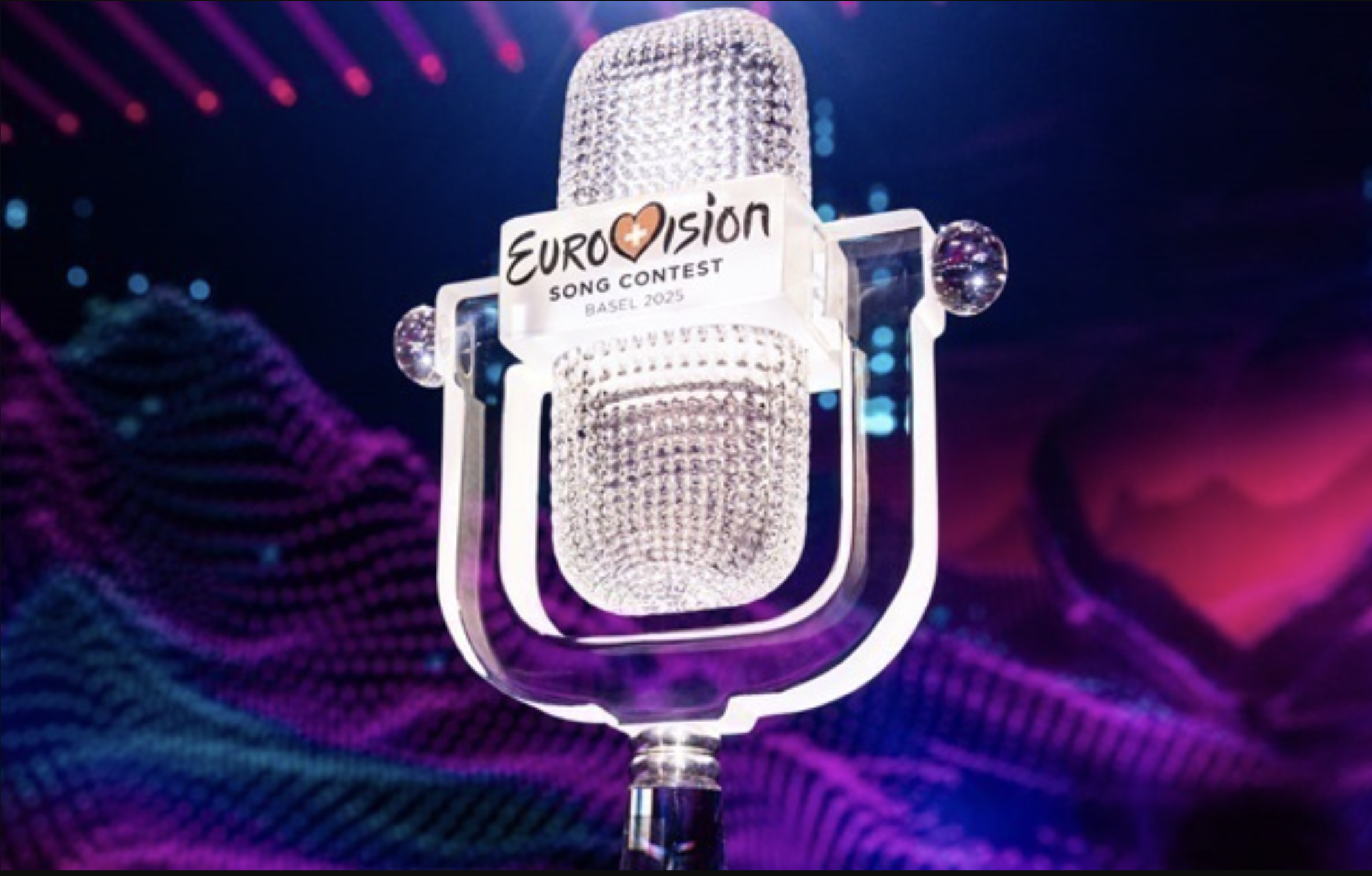
The 69th Eurovision Song Contest took place in Basel, Switzerland, in May 2025. The grand final was held on May 17, 2025. Thirty-seven countries participated in total.
The winner was Austria’s JJ — a young countertenor singer whose real name is Johannes Pietsch. He was born in Vienna in 2001, grew up in Dubai, and is of Filipino and Austrian heritage. JJ performs at the Vienna State Opera and studies classical music at a prestigious university in Vienna. His winning song, “Wasted Love,” was an operatic ballad — a highly unusual style for a pop music competition. It earned 436 points in total.
Second place went to Israel’s Yuval Raphael with “New Day Will Rise” (357 points), and third place to Estonia’s Tommy Cash with “Espresso Macchiato” (356 points). The contest attracted 166 million television viewers.
Recent winners:
- 2021 — Italy: Måneskin — “Zitti e buoni”
- 2022 — Ukraine: Kalush Orchestra — “Stefania”
- 2023 — Sweden: Loreen — “Tattoo”
- 2024 — Switzerland: Nemo — “The Code”
- 2025 — Austria: JJ — “Wasted Love”
Why do people love it so much?
Legacy
It is a fair question. Eurovision is often criticised — for being too political, too camp, too commercial, or too unpredictable. Critics point out that voting is sometimes influenced by geography and friendship between countries rather than the quality of the songs. And yet, year after year, the audience keeps coming back.
Part of the appeal is exactly what the critics dislike. Eurovision is unpredictable. A Finnish heavy metal band can win. A countertenor opera singer can win. A folk-rap group from a country at war can win. There are very few events in the world where such different kinds of music compete on the same stage — and where the audience from over a hundred countries gets to decide.
There is also something genuinely moving about the concept. Since 1956, the contest has been built on a simple idea: countries that were once at war can come together, listen to each other’s music, and vote. Not everything about Eurovision is political or deep. But its foundation — connection through culture — is something worth celebrating.
Seventy years and still going
In 2026, the Eurovision Song Contest will celebrate its 70th edition in Vienna, Austria. It will once again bring together dozens of countries, millions of viewers, and an enormous collection of songs that range from the sublime to the gloriously ridiculous. Whatever you think of the contest, one thing is clear: nobody does live television quite like Eurovision. And nobody, anywhere, does “douze points” with quite as much drama.