
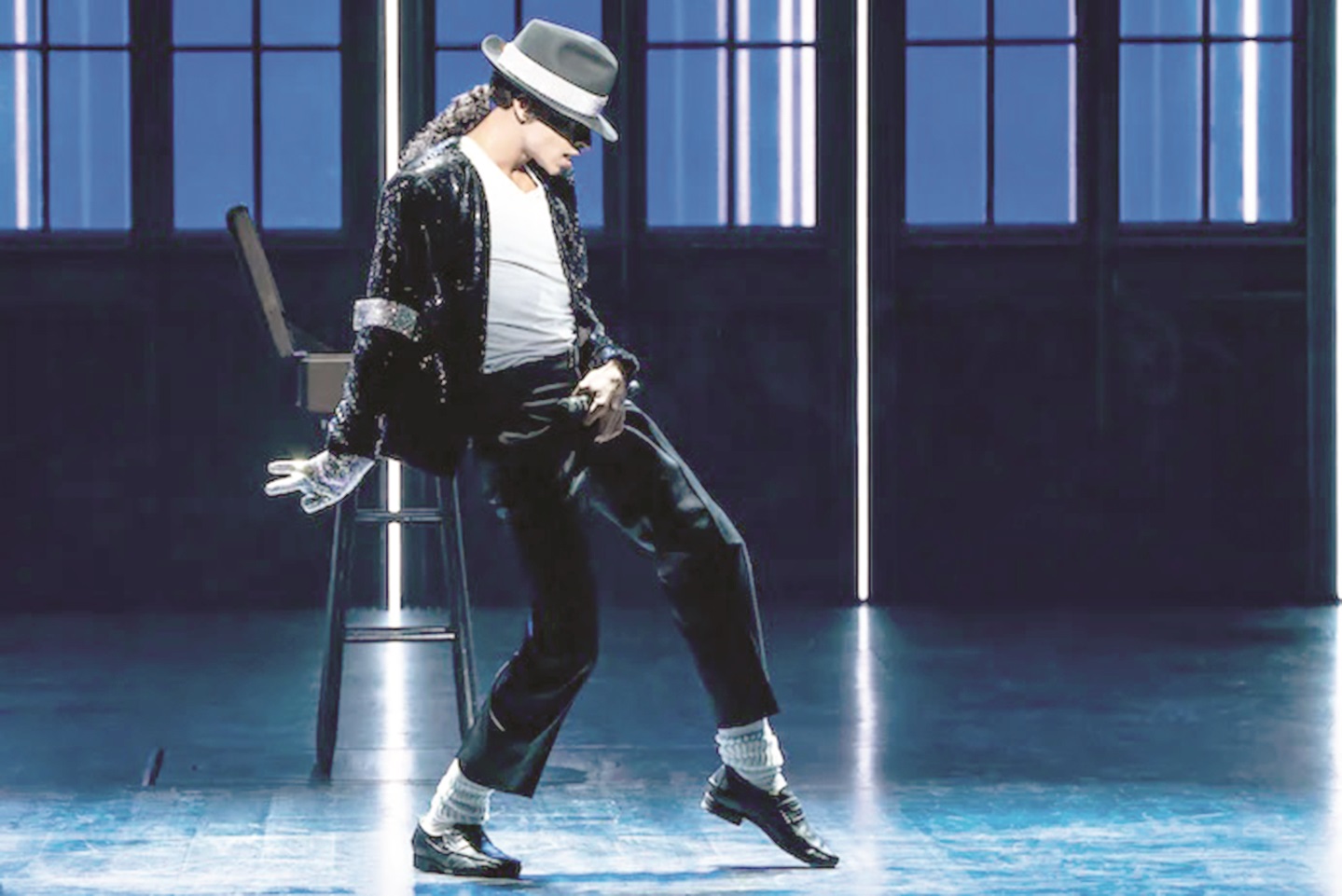
He was six years old when he first stepped onto a stage. By the time he was twelve, he had a number one hit. By the time he was twenty-five, he had changed music, dance, and popular culture forever. This is the story of Michael Jackson — a life full of extraordinary talent, global fame, and deep complexity.
A childhood in music
Early life · 1958–1968
Michael Joseph Jackson was born on August 29, 1958, in Gary, Indiana — a small industrial city near Chicago. He was the eighth of ten children born to Joe and Katherine Jackson. The family lived in a small two-bedroom house, but their home was always full of music.
His father, Joe Jackson, was a strict man who worked at a steel mill during the day and played guitar in a local band at night. When he noticed that his sons had natural musical talent, he began to push them hard. He formed a family group called the Jackson 5, which included Michael and his brothers Jackie, Tito, Jermaine, and Marlon. Joe made the boys rehearse for up to five hours every day and was known to be a very demanding — sometimes frightening — father.
Even as a young child, Michael’s talent was impossible to ignore. He could copy difficult dance moves after watching them just once, and his singing voice was remarkably powerful for someone so small.
The Jackson 5 began performing at local talent shows across the Midwest, winning almost every competition they entered. By 1968, they were performing at the famous Apollo Theater in New York City, where they caught the attention of Motown Records — one of the most important music labels in American history.
The Jackson 5 and Motown
Group success · 1969–1975
In 1969, the Jackson 5 signed with Motown Records and the Jackson family moved to Los Angeles. Singer Diana Ross helped introduce the group to the public. Their first four singles — “I Want You Back,” “ABC,” “The Love You Save,” and “I’ll Be There” — all reached number one on the American charts. Each of them sold over one million copies.
Michael, though the youngest member of the group, quickly became the star. His voice, energy, and personality made him stand out. Motown executives immediately recognised his potential and began releasing solo records for him alongside the group’s work. His solo single “Got to Be There” reached number four on the charts in 1971, and his cover of “Ben” earned him his first Oscar nomination for Best Original Song in 1972.
The Jackson 5 scored 13 Top 20 singles for Motown and appeared on television specials and their own cartoon series. But Michael was clearly becoming something bigger than just a member of a family group.
Off the Wall — the beginning of a new era
Solo career · 1979
After the Jacksons left Motown in 1975 and moved to Epic Records, Michael continued to grow as an artist. The turning point came in 1979, when he began working with legendary producer Quincy Jones on his solo album Off the Wall.
The album was a massive success. It was the first album by a solo artist to produce four Top 10 hits on the Billboard Hot 100 at the same time. The single “Don’t Stop ‘Til You Get Enough” won Michael his first Grammy Award for Best Male R&B Vocal Performance. Critics praised his voice and his ability to move naturally between pop, soul, and funk.
Both Off the Wall and Thriller were later inducted into the Grammy Hall of Fame in 2008, recognising their lasting importance to music history.
Thriller — the album that changed everything
Peak of fame · 1982–1984
In November 1982, Michael Jackson released Thriller. Nothing in music history had prepared the world for what followed.
The album produced seven hit singles, including “Billie Jean,” “Beat It,” and the title track “Thriller.” It spent 37 weeks at the top of the American album charts. The 14-minute music video for “Thriller” — directed by John Landis and featuring elaborate choreography and special effects — was unlike anything ever seen on television before. It turned music videos from promotional clips into genuine works of art.
- Over 66 million copies sold worldwide
- 8 Grammy Awards won in a single night (1984) — a record never beaten
- 7 hit singles from one album
- The best-selling album of all time (Guinness World Records)
At the 26th Grammy Awards on February 28, 1984, Michael won eight Grammy Awards in a single night — a record that has never been beaten. He won Album of the Year, Record of the Year, and six other awards. President Ronald Reagan personally honoured him at the White House that same year with a Presidential Humanitarian Award.
The moonwalk and the art of performance
Dance & innovation
Michael Jackson was not only a singer — he was one of the greatest dancers in the history of popular music. He popularised several iconic moves, but none more famous than the moonwalk.
He performed the moonwalk for the first time on television on March 25, 1983, during a Motown anniversary special, while singing “Billie Jean.” The audience’s reaction was immediate and electric. The move — sliding backwards while appearing to walk forwards — became one of the most recognisable moments in entertainment history.
Another famous move was the “anti-gravity lean,” seen in the music video for “Smooth Criminal.” In it, Jackson and his dancers leaned forward at an impossible 45-degree angle while keeping their bodies perfectly straight. This was made possible by a specially designed shoe that Michael co-invented and patented in 1993 — the shoe contained a hidden slot in the heel that locked onto a peg in the stage floor at the right moment.
His approach to performance — combining music, dance, costume, and storytelling — created a new standard for what a pop artist could be.
Breaking racial barriers on MTV
Cultural impact
In the early 1980s, MTV — the new music television channel — almost never played videos by Black artists. When “Billie Jean” was released, the channel initially refused to add it to its rotation. Epic Records pushed back hard, and MTV finally agreed to play it.
The response was enormous. “Billie Jean” became one of the most-watched videos in the channel’s short history. Michael’s success forced MTV to open its programming to a much wider range of Black artists, including Prince and Whitney Houston. Music historians widely credit him with changing the racial landscape of American popular media.
Bad, Dangerous, and continued success
Later albums · 1987–2001
After Thriller, many people wondered if Michael could possibly match that level of success. His 1987 album Bad gave a clear answer. It produced five number one singles in the United States — a record at that time. The Bad World Tour was one of the most successful concert tours in history.
His 1991 album Dangerous was another commercial triumph. Songs like “Black or White” and “Heal the World” showed a new dimension of his artistry — using music to address issues such as racism and global poverty. His 1995 double album HIStory combined 15 hit songs with 15 new recordings and was also a major success. His final studio album, Invincible, was released in 2001.
Throughout his career, he penned more than 150 songs, with over 20 reaching multi-million performance status on American radio and television.
A passion for giving
Humanitarian work
Despite his extraordinary wealth and fame, Michael Jackson gave a great deal of both back to the world. He founded the Heal the World Foundation, a charity focused on improving the lives of children. He also co-wrote “We Are the World” in 1985 with Lionel Richie — a song that raised millions of dollars for famine relief in Africa and became one of the best-selling singles of all time.
The Guinness Book of World Records recognised him for supporting more charities than any other pop star. He contributed an estimated $300 million to charitable causes during his lifetime. In 1990, President George H.W. Bush named him “Artist of the Decade.”
He was inducted into the Rock and Roll Hall of Fame twice — once as a member of the Jackson 5 in 1997, and once as a solo artist in 2001. Only a small number of artists have received this honour twice.
A troubled final chapter
Controversy & death · 1993–2009
Michael Jackson’s personal life became increasingly difficult from the early 1990s onwards. He faced serious allegations of child abuse in 1993 and again in 2003. He was put on trial in 2005 but was found not guilty on all charges. However, the legal battles, the intense media attention, and personal pressures took a severe toll on him.
He struggled with financial problems and a dependency on prescription medication. His famous Neverland Ranch — a large private property in California — was eventually sold. By 2009, he was planning a major concert series called “This Is It” in London, which was meant to be a comeback. Fifty shows had been announced and tickets sold out within hours.
He never made it to the stage. On June 25, 2009, Michael Jackson died at his home in Los Angeles at the age of 50. The official cause of death was cardiac arrest caused by acute propofol intoxication — a powerful anaesthetic that had been administered by his personal physician, Dr. Conrad Murray. In 2011, Murray was found guilty of involuntary manslaughter.
The news of his death shocked the world. On July 7, 2009, a public memorial was held at the Staples Center in Los Angeles, which was watched by an estimated one billion people around the world.
A legacy that will not fade
Legacy
Since his death, Michael Jackson has remained one of the most discussed, celebrated, and analysed figures in the history of entertainment. His estate has earned over $2 billion from concerts, shows, and productions related to his work. A Broadway musical, MJ the Musical, premiered in 2022 and won the Tony Award for Best Actor in a Musical. A biographical film, Michael, directed by Antoine Fuqua and starring his nephew Jaafar Jackson, was released in April 2026.
He holds 13 Grammy Awards, including the Grammy Legend Award and the Grammy Lifetime Achievement Award. He holds dozens of Guinness World Records and was recognised by the Guinness Book as the Most Successful Entertainer of All Time. The National Portrait Gallery named him the most depicted cultural figure of the 21st century.
More than music
Michael Jackson was not simply a pop star. He was a dancer who invented new ways of moving, a performer who redefined what a concert could be, and a songwriter who addressed some of the most important issues of his time. His life was filled with both extraordinary achievement and deep personal struggle. Whatever one thinks about the controversies surrounding him, the music remains — and for millions of people around the world, it always will.