
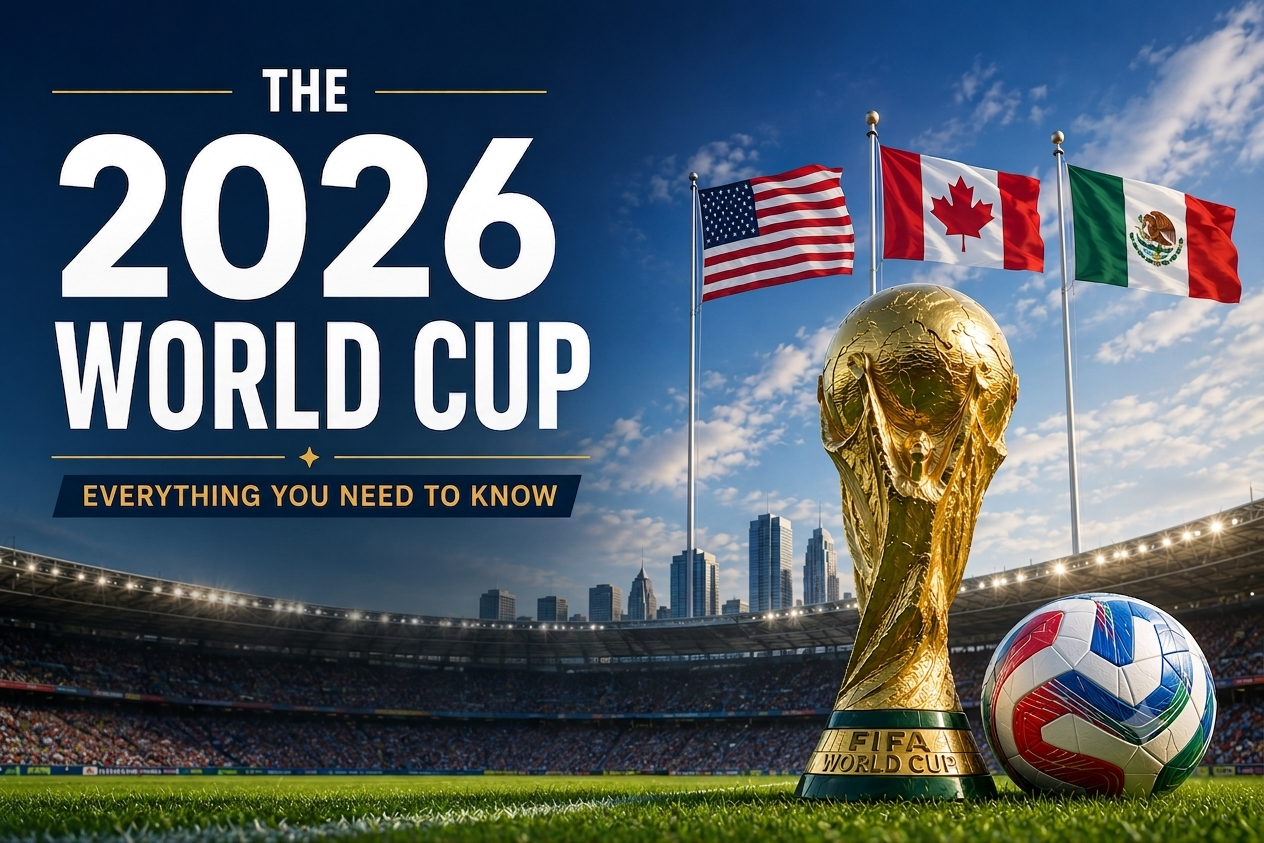
Imagine 48 national teams, 16 cities, and three countries all sharing one football tournament. This is not a dream — it is the 2026 FIFA World Cup, the biggest World Cup in history. For the first time ever, the United States, Canada, and Mexico are hosting the tournament together. And after five weeks of exciting matches, the world is now watching the final two teams fight for the trophy.
Where It All Began: A Short History of the World Cup
To understand why the World Cup means so much to people, it helps to look back at where it started. The first-ever FIFA World Cup took place in 1930, in Uruguay. At that time, only 13 teams took part, and the journey was not easy. Many European teams did not want to travel across the ocean by boat, so most of the players came from South America. In the final, host nation Uruguay beat Argentina 4–2 to become the first World Cup champions in history. The whole country celebrated, and Uruguay even made the following day a national holiday.
Over the next decades, the tournament grew bigger and more famous. Brazil became one of the most successful teams, winning multiple titles and producing legendary players like Pelé, who was only 17 years old when he helped Brazil win in 1958. In 1966, England won the World Cup for the only time in their history, playing in front of their own fans. As television spread around the world, more people could watch the matches live, and football slowly became a truly global sport.
The number of teams kept growing too. In 1982, the tournament expanded from 16 to 24 teams. Then, in 1998, it grew again to 32 teams — a format that lasted for over twenty years. Now, in 2026, the World Cup has reached a new record with 48 national teams, showing just how much the sport has grown since that first small tournament in Uruguay almost 100 years ago.
A Bigger Tournament Than Ever Before
The 2026 World Cup started on June 11 with the opening match in Mexico City. This tournament is special because it has 48 teams instead of the usual 32. That means more matches, more countries, and more chances for surprises. In total, there are 104 matches, and the competition lasts 39 days — much longer than past World Cups.
The teams were divided into 12 groups of four. Each team played three matches in the group stage. Then, the top two teams from every group moved on, along with the eight best third-placed teams. This new system gave more countries a real chance to reach the knockout rounds, and it also meant that smaller football nations had a genuine opportunity to shine on the biggest stage.
Surprising Results and Big Exits
Football fans love surprises, and this World Cup had plenty. All three host nations — the United States, Canada, and Mexico — were eliminated in the Round of 16. The USMNT lost to Belgium, Mexico fell to England, and Canada was beaten by Morocco. Many fans were disappointed, but these results also showed how competitive the tournament has become.
Other big teams also left the competition earlier than expected. France, one of the tournament favorites, lost to Spain in the semifinal. This ended an incredible 44-year streak of French success in major finals. It was a shocking moment for football fans everywhere, and it proved once again that in football, nothing is guaranteed.
Argentina’s Dramatic Semifinal
One of the most exciting matches of the tournament was the semifinal between Argentina and England. For most of the game, the result was uncertain. Then, in the final minutes, Argentina came back to life. Enzo Fernández scored in the 85th minute, and Lautaro Martínez added a second goal in the 92nd minute. Both goals came from passes by Lionel Messi, who continues to show why he is one of the greatest players in football history.
This dramatic win sent Argentina to the final, where they hope to defend their title from 2022 and add another chapter to their already rich football history.
The Final: Spain vs. Argentina
On Sunday, July 19, the world will watch the first-ever World Cup final between Spain and Argentina. The match will take place at MetLife Stadium in East Rutherford, New Jersey, with kickoff at 3:00 p.m. ET.
Argentina is looking for back-to-back titles. They have already won the World Cup three times, most recently in 2022. Spain, on the other hand, wants to win their second World Cup title after their victory in 2010. Interestingly, these two football powers have never met in a World Cup final before, so this match will make history no matter who wins.
Spain’s young star Lamine Yamal has been one of the most talked-about players of the tournament. Many fans are excited to watch him compete against football legend Lionel Messi, who may be playing in his final World Cup. It feels like a symbolic moment — the past and the future of football meeting on the same field.
Before the final, there is also a third-place match between France and England, played on Saturday, July 18, in Miami Gardens.
A Historic Celebration
This World Cup is bringing new traditions too. For the first time, FIFA will give championship rings to the winning team, similar to the tradition in American sports like the Super Bowl. Fans will even be able to buy their own versions of these rings — a fun way to celebrate the historic 2026 tournament.
From a small, 13-team tournament in Uruguay in 1930 to a massive 48-team celebration across three countries in 2026, the World Cup has changed enormously — but its magic has stayed the same. Whether you support Spain, Argentina, or simply love the game of football, one thing is certain: this World Cup will be remembered for its surprises, its drama, and its history-making final. As millions of fans around the world wait for kickoff, one question remains — will Messi lift the trophy one final time, or will Yamal and Spain write a new chapter in football history?